Table of Contents
- Brick Sets the Tone for an Entire Community
- Using This Homebuilder Brick Guide
- Performance That Holds Up at Scale
- Creating Variety Without Losing Cohesion
- Keep Mortar Consistent Across Every Building
- Budgeting for Volume and Phased Builds
- Bring Your Next Project to North Georgia Brick
- Frequently Asked Questions
Brick Sets the Tone for an Entire Community
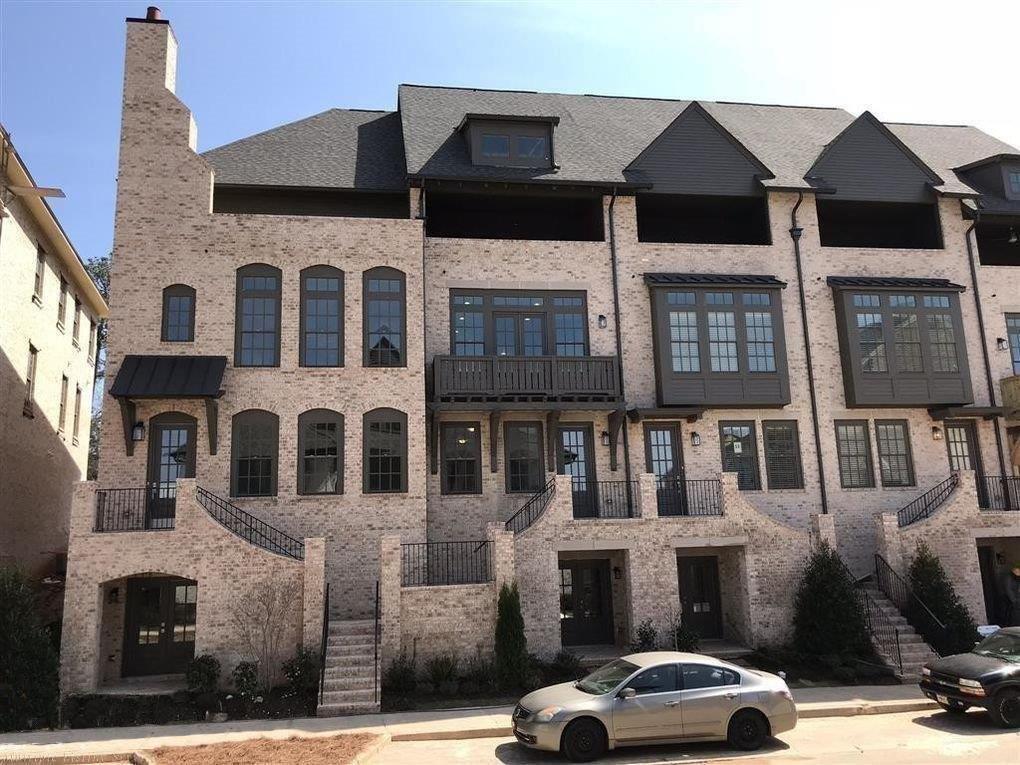
On a row of townhomes, a garden apartment community, or a three-story condo building, one brick decision repeats across every elevation and phase. That choice shapes how the property looks from the street, how it holds up through decades of Georgia weather, and how quickly units sell or lease. Choosing brick for a new home is a big decision on its own, and multiplying it across an entire community raises the stakes for builders and developers.
Using This Homebuilder Brick Guide
The good news is that the choices that matter most are the same ones you make on every project, from how the wall handles water to how the colors play across a row of buildings. Start with performance, and the conversations about color, mortar, and budget with your architect and mason crew get a lot easier.
Performance That Holds Up at Scale

On a multifamily project, every wall detail repeats on every building, and so does every callback when something goes wrong. Brick veneer works as a drainage wall, so the flashing, weeps, and air space behind it matter as much as the brick itself, which is why it pays to have an experienced team handle the installation. Once the walls are up, brick needs no paint or stain, and because it’s a non-combustible finish, brick buildings can sit closer together on a tight site. Then there’s size. Modular brick like Forest Glen is the traditional standard, while Bradford Hall Tudor gives multistory buildings the classic look of full brick in a lighter unit that’s easier to install over existing surfaces.
Creating Variety Without Losing Cohesion
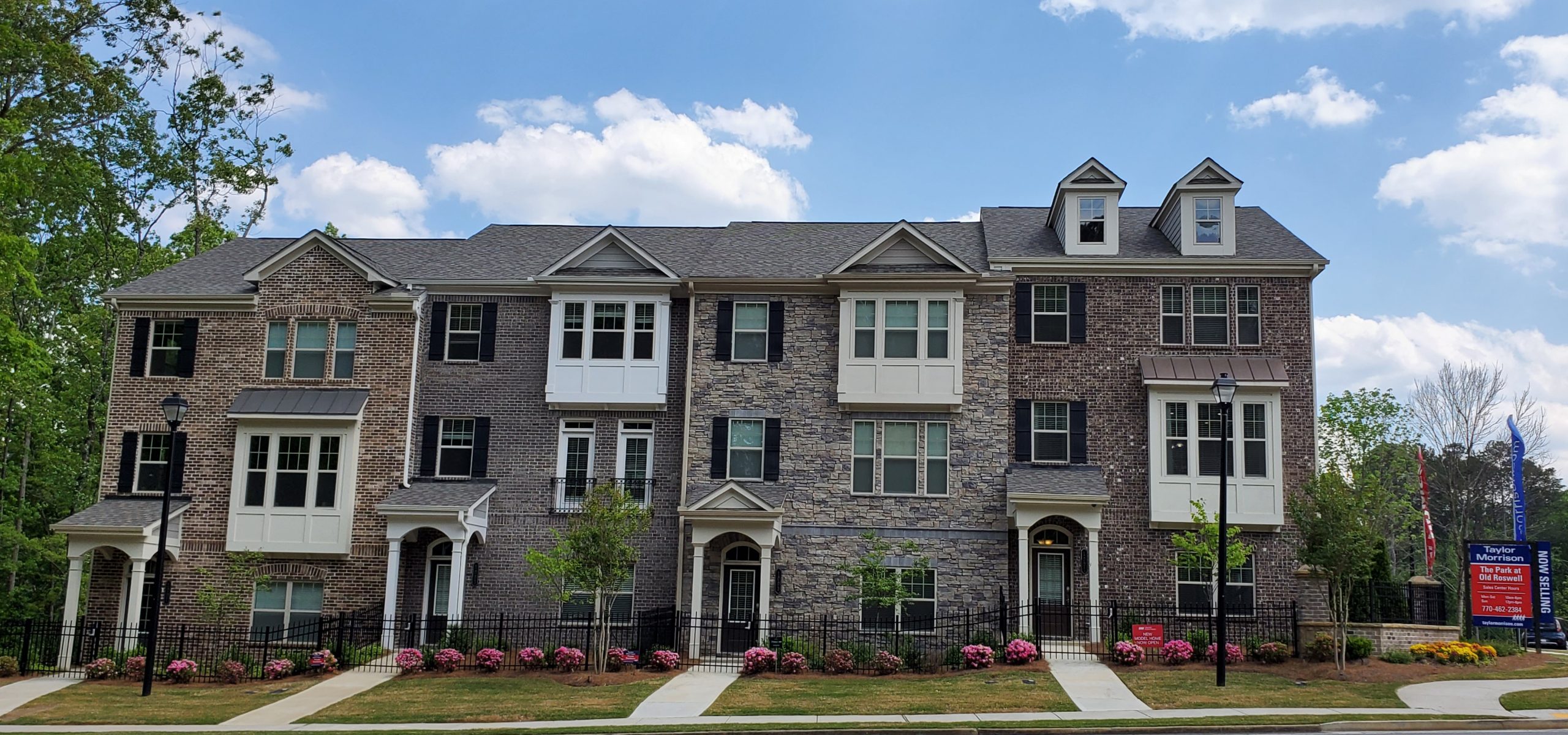
A row of identical facades can make a community feel flat, so many builders work from a palette of complementary materials and rotate them unit by unit. At Taylor Morrison’s The Park at Old Roswell, several shades of brick alternate with stone across a single townhome row, so each home has its own look while the building still feels like one community. Book an appointment at one of our showrooms to compare options side by side, since brick should always be chosen from real product samples (screens and printed photos never show true color and texture).
Keep Mortar Consistent Across Every Building
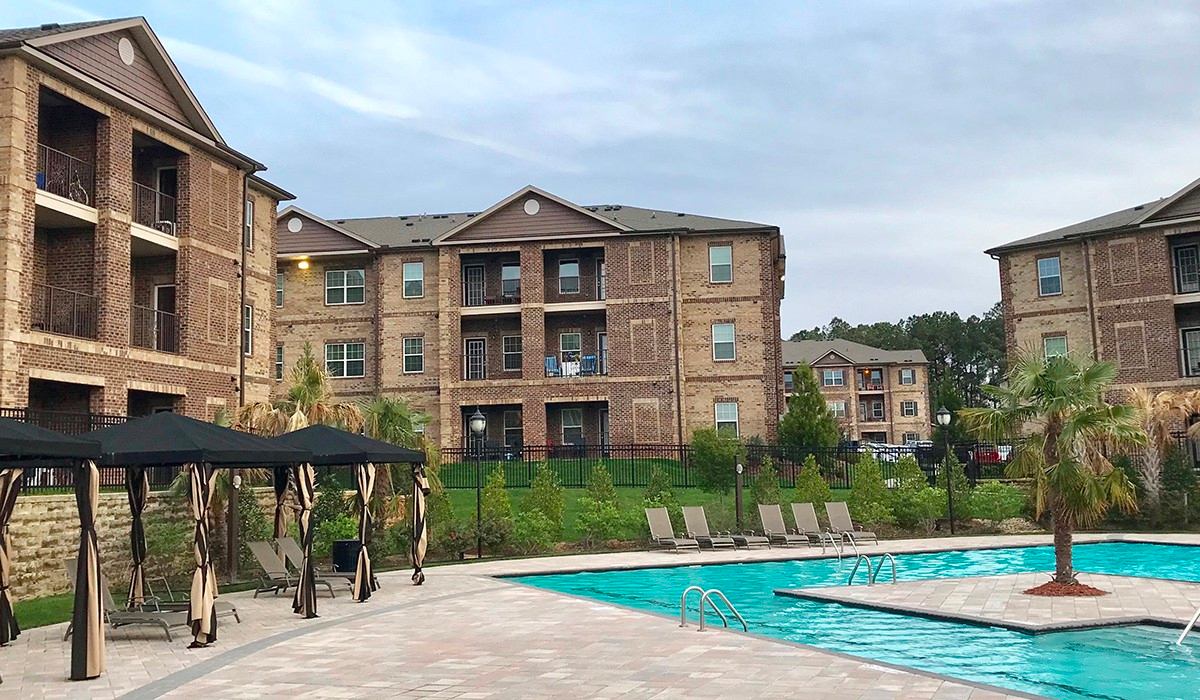
Mortar runs through every joint in the wall, so its color strongly affects the finished look. Gray mortar cools a red brick, buff or tan mortar warms it up, and white mortar against white brick gives a soft, uniform finish. Once you choose a mortar color and joint style, use them on every building in the project. In a garden apartment community where several three-story buildings face each other across the pool, any change in mortar shade from one building to the next would be easy to spot.
Budgeting for Volume and Phased Builds

Brick size affects how many units fit into each square foot and how much labor it takes to lay them; on a project with dozens of units, that difference adds up quickly. Large orders and specialty colors may need more lead time, so plan for it early in the schedule. When you estimate, include every place brick shows up on the property. At Buckhead Park North, Nottingham Tudor wraps from the townhome facades onto the low site walls and entry sign, and ordering it all together keeps every piece in the same color range. For phased communities, keep a record of the exact brick used on each building and talk with our team about future phases before the first order ships.
Bring Your Next Project to North Georgia Brick
Performance, palette, mortar, and budget all come together in one decision, and getting them right at the start keeps a community looking cohesive long after the last unit is finished. North Georgia Brick partners with more than 20 manufacturers, including General Shale, Glen-Gery, Pine Hall Brick, and Henry Brick, and our team works with builders, architects, and developers on multifamily projects across North Georgia. For commercial brick design ideas, browse our Pinterest, and when you’re ready to see samples in person, book an appointment at our Cartersville, Cumming, Lovejoy, or Newnan showroom.
Frequently Asked Questions
Why does installation matter so much on a multifamily project?
Brick veneer works as a drainage wall, and the flashing, weeps, and air space behind it matter as much as the brick itself. An experienced installation team helps keep one mistake from turning into repairs on dozens of units.
Why is brick a good fit for tight multifamily sites?
Brick is a non-combustible finish, so brick buildings can sit closer together on a tight site.
What is thin brick, and when does it make sense?
Thin brick gives multistory buildings the classic look of full brick in a lighter unit that’s easier to install over existing surfaces. Bradford Hall Tudor is one example.
How can builders keep townhomes from looking identical?
Many builders rotate a palette of complementary materials unit by unit, the way The Park at Old Roswell alternates several shades of brick with stone across a single townhome row.
Why does mortar consistency matter on a multi-building project?
Mortar runs through every joint, so even a small shade shift shows up when two buildings sit side by side.
What should builders include when estimating brick?
Include every place brick shows up on the property, such as site walls, piers, and entry monuments, so everything is ordered together and stays in the same color range.
Where can builders see North Georgia Brick products in person?
Builders can book an appointment at our Cartersville, Cumming, Lovejoy, or Newnan showroom, and find design inspiration on the North Georgia Brick Pinterest.