
Table of Contents
Why Brick Pattern Matters
Brick already brings warmth and durability to a home, but the way it is laid turns a floor or wall into something people actually stop to notice. Two identical bricks, in the same color and size, can appear plain or striking depending entirely on the pattern in which they are set. A tight grid feels calm and architectural. An angled layout adds movement and draws the eye across a room rather than straight through it. That is the part people underestimate when planning a project: the pattern does just as much visual work as the brick itself.
Where Brick Patterns Show Up Around the Home
Patterned brick tends to show up in the spots that get noticed most. A herringbone walkway leading up to the front door sets the tone before a guest even rings the bell. A basketweave backsplash behind a kitchen range adds texture without competing with cabinetry or countertops. Stack bond adds a clean, modern edge to an interior accent wall, and offset patterns still do the reliable, everyday work on mudroom and entryway floors that handle real foot traffic. Once you start looking for it, patterned brick turns up on porches, in sunrooms, along garden paths, and around fireplaces, anywhere a home could use a little more texture and intention.
Choosing a Pattern for Your Space
Before picking a pattern, think about the size of the room, the amount of traffic it gets, and the look you are going for. Some patterns, like a simple offset, are forgiving and easy to install almost anywhere. Others, like herringbone or basketweave, require more upfront planning but pay off with a floor that looks custom-built. Here are five patterns worth exploring, and the brick that fits each one.

Offset Brick
For this classic pattern, you can use just about any brick size you like. Lay the brick in rows and shift each row slightly to the left or right, and you get that familiar offset look. A traditional 50/50 shift gives you the standard running bond, while a 40/60 or 30/70 offset creates a softer, more relaxed rhythm across the floor. The rectangular shape of the brick makes this one nearly foolproof at any shift you choose.
Best brick type: Regular, full-size brick. The classic rectangular proportions are what make the offset shift read clearly, and standard brick holds up well in high-traffic areas like entryways and mudrooms.
Stack Bond Brick
A stack bond pattern lines up every vertical edge, so the finished floor looks like a clean, uniform grid. This is a look for people who want their flooring to feel intentional and architectural, with strong horizontal lines that suit a modern layout. Use an elongated brick with minimal mortar contrast, and the grid effect becomes even sharper.
Best brick type: Thin brick. The elongated, uniform shape of thin brick makes it easier to keep every joint aligned, and it is a lighter installation for interior floors such as kitchens or living rooms.
Herringbone Brick
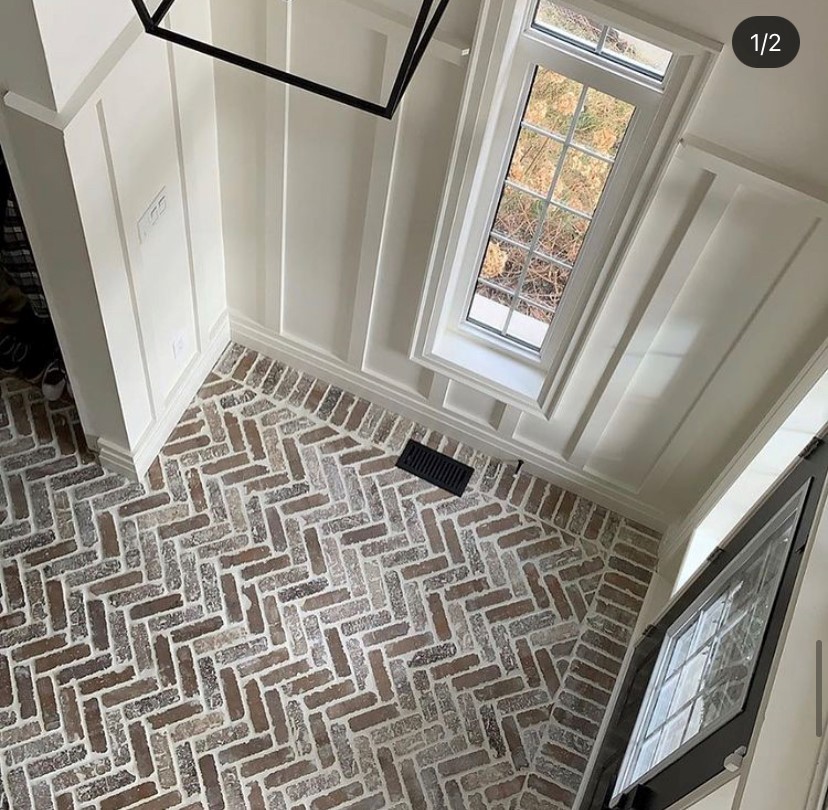
Herringbone looks complicated, but it is genuinely one of the easier patterns to install once you have planned the layout. Each brick sits at a 90-degree angle to the one beside it, forming a zigzag that reads as elegant rather than busy. It pairs beautifully with modern decor, adds depth to a monochromatic color scheme, and has a well-earned reputation for making a small room feel larger.
Best brick type: Thin brick. The smaller, more consistent dimensions make the angled cuts and tight joints far easier to manage, especially in interior spaces where you want a refined finish.
Parquet Brick
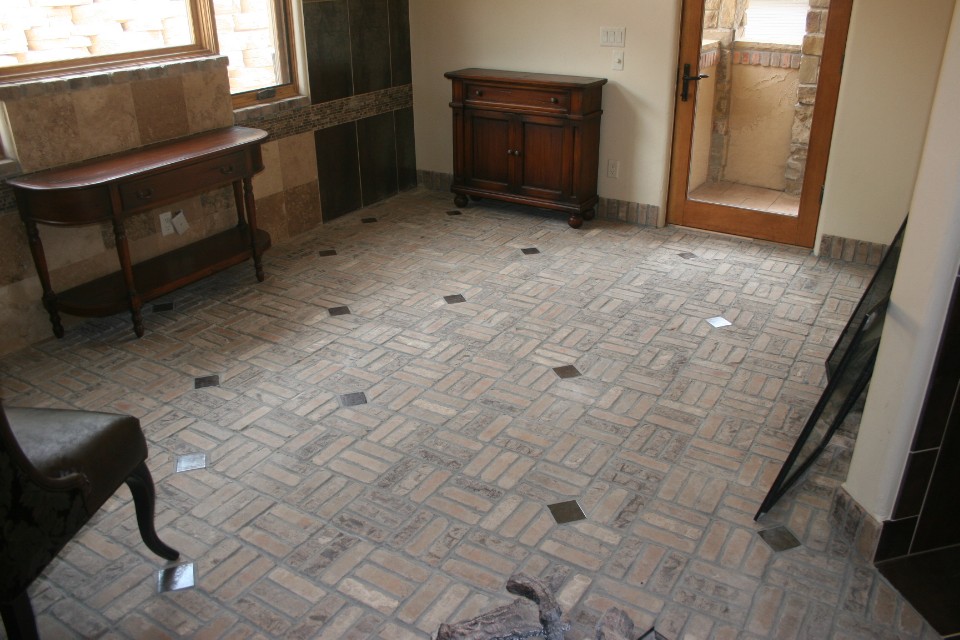
Parquet patterns are geometric mosaics built from repeating squares, and brick pavers make this one surprisingly simple, often needing just two bricks to complete a square. Lay one square with the long edges running north to south, then set the next square with the long edges running east to west, and repeat. The result is a floor with real texture and movement, built from a layout anyone can follow.
Best brick type: Regular brick pavers. The thicker profile stands up well to outdoor use on patios and walkways, where parquet patterns are most visible.
Basketweave Brick
Basketweave takes the parquet idea and doubles down, pairing two bricks side by side to form a small rectangle, then alternating the direction of each pair so they interlock like the strands of a woven basket. It has a timeless, almost cottage-garden feel and works just as well framing a garden path as it does anchoring a covered porch.
Best brick type: Thin brick for interior applications, regular brick pavers for exterior ones. The pattern depends on consistent brick dimensions to interlock cleanly, so whichever you choose, stick with a uniform size throughout.
Find Your Perfect Pattern at North Georgia Brick
Whether you are drawn to the clean grid of a stack bond, the movement of a herringbone, or the woven texture of a basketweave, the pattern you choose will shape how the finished space feels, and the right brick for the job depends on where that pattern is going in your home. Ready to see these patterns in person? Visit any one of our locations in Cartersville, Cumming, Lovejoy, Newnan, or pick up in Doraville. And if you are still gathering ideas, visit our Pinterest for more design inspiration you can bring straight into your own home.
Frequently Asked Questions (FAQ):
What is the easiest brick floor pattern to install?
Offset brick is the most forgiving pattern for first-time installers. It uses a simple row-and-shift method that works with almost any brick size.
Does herringbone brick really make a room look bigger?
Yes. The diagonal lines draw the eye across the room rather than straight through it, creating the illusion of more space, especially in smaller rooms.
Should I use thin brick or regular brick for flooring?
It depends on the location and pattern. Thin brick works well for interior floors and detailed patterns like herringbone and stack bond, while regular brick pavers hold up better outdoors in patterns like parquet and basketweave.
How many bricks does a parquet pattern need?
Most parquet squares require only two bricks, arranged with alternating long edges to create a repeating mosaic effect.
Is basketweave brick good for outdoor use?
Yes, especially with regular brick pavers. The interlocking pairs create a sturdy, textured surface that suits patios, walkways, and garden paths.
Can I mix brick patterns in one space?
You can, though most homeowners get the cleanest result by choosing one pattern for the main floor and using a second pattern, like a herringbone or basketweave, as a border or accent.
Where can I see these brick patterns in person?
Visit one of North Georgia Brick’s locations in Cartersville, Cumming, Lovejoy, Newnan, or Doraville.